
First Human Case of Flesh-eating Screwworm
© Gemm Media
Release Date
08/25/2025
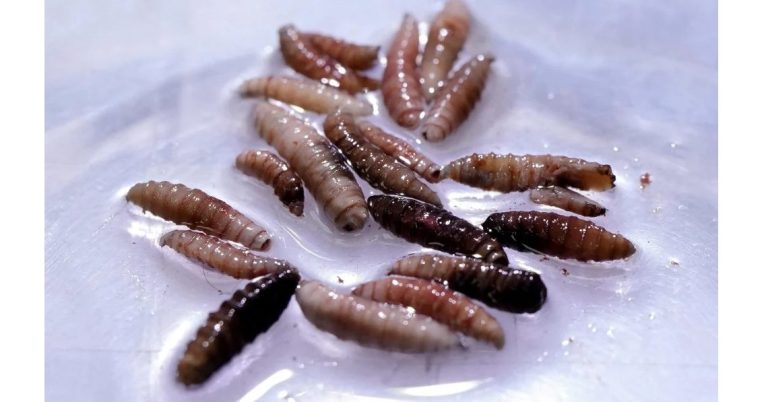
The parasite — the larvae of the new world screwworm fly — can devastate cattle herds and is rife in parts of Central America.
The first human case of the flesh-eating parasite "New World screwworm" has been detected in the United States, the Department of Health and Human Services said early Monday.
The case, involving a person who had recently traveled to El Salvador, was confirmed to be screwworm by the Centers for Disease Control and Prevention and the Maryland Department of Health on Aug. 4.
The Maryland Department of Health said in a Monday statement that the resident has recovered "from the infection, and the investigation confirmed there is no indication of transmission to any other individuals or animals."
"This is the first human case of travel-associated New World screwworm myiasis (parasitic infestation of fly larvae) from an outbreak-affected country identified in the United States," HHS spokesperson Emily G. Hilliard said in a statement.
"The risk to public health in the United States from this introduction is very low," he said.
The parasite — the larvae of the New World screwworm fly — can devastate cattle herds and is rife in parts of Central America and Mexico. It can destroy wildlife and even kill household pets.
There were serious outbreaks in the 1980s and 1990s in Central America and it was eradicated at great expense, only to return in the last two years.
U.S. Secretary of Agriculture Brooke L. Rollins traveled to Texas to announce a five-part plan to combat the screwworm on Aug. 15
This includes plans to breed billions of sterile flies and dump them from the air over southern Texas and Mexico in the hope of stopping the parasite's spread.
The sterilized male flies mate with females, but the eggs don't hatch. Eventually, the population reduces and dies out. This technique worked in the 1960s when the U.S. suffered its last screwworm outbreak.
And the federal government may face calls to accelerate its work on this: When first announced in June, the sterilization plan wasn't due to be operational for "two to three years."
Texas Gov. Greg Abbot, commenting on the federal government scheme, said the state agriculture industry, with its 2 million jobs, was worth $867 billion. "All of this is at risk because of the New World screwworm."
A report from the USDA last year estimated an outbreak of screwworm could cost Texas at least $1.8 billion due to livestock deaths, labor costs and medication.
The little parasitic flies — also known as cochliomyia hominivorax — have an effect that's vast and devastating, but in isolation quite disgusting. The females can lay eggs in any warm-blooded animal, which then hatch unleashing hundreds of screwworm larvae, so-called because of their sharp mouths and their burrowing being compared to the motion of a screw.
Human infections can be fatal but are rare and most cases can be treated.
The USDA has said that screwworms have been making their way north into Mexico from other parts of Central America. The fly is endemic in Cuba, Haiti, the Dominican Republic and some South South American nations it said.
Mexico reported a case in Ixhuatlan de Madero, Veracruz, in July, 370 miles from the Texas border, prompting DHH to immediately shut down cross-border cattle trade, following similar stops in November and May.
© Gemm Media.
© Copyright material is presented for viewing purposes only, and is not intended for copying or publication unless authorized by Gemm Broadcasting Corporation.
Primer Caso Humano de Parásito Carnívoro
Fecha de Nota
08/25/2025
El parásito, las larvas de la mosca del gusano del nuevo mundo, puede devastar rebaños de ganado y es muy rico en partes de América Central.
El primer caso humano del parásito carnívoro "gusano del Nuevo Mundo" se ha detectado en los Estados Unidos, dijo el Departamento de Salud y Servicios Humanos el lunes temprano.
El caso, que involucró a una persona que había viajado recientemente a El Salvador, fue confirmado por los Centros para el Control y la Prevención de Enfermedades y el Departamento de Salud de Maryland el 4 de agosto.
El Departamento de Salud de Maryland dijo en una declaración del lunes que el residente se ha recuperado "de la infección, y la investigación confirmó que no hay indicios de transmisión a ningún otro individuo o animal".
"Este es el primer caso humano de miiasis del gusano del Nuevo Mundo (infestación parásita de larvas de mosca) asociado a los viajes de un país afectado por un brote identificado en los Estados Unidos", dijo la portavoz de HHS Emily G. Hilliard en un comunicado.
"El riesgo para la salud pública en los Estados Unidos por esta introducción es muy bajo", dijo.
El parásito, las larvas de la mosca del gusano del Nuevo Mundo, puede devastar rebaños de ganado y es muy comune en partes de América Central y México. Puede destruir la vida silvestre e incluso matar a las mascotas domésticas.
Hubo brotes graves en las décadas de 1980 y 1990 en América Central y fue erradicado con un gran costo, solo para regresar en los últimos dos años.
Estados Unidos Secretaria de Agricultura Brooke L. Rollins viajó a Texas para anunciar un plan de cinco partes para combatir el gusano el 15 de agosto.
Esto incluye planes para criar miles de millones de moscas estériles y arrojarlas desde el aire sobre el sur de Texas y México con la esperanza de detener la propagación del parásito.
Las moscas macho esterilizadas se aparean con las hembras, pero los huevos no eclosionan. Eventualmente, la población se reduce y muere. Esta técnica funcionó en la década de 1960 cuando Estados Unidos sufrió su último brote de gusanos de tornillo.
Y el gobierno federal puede enfrentar llamadas para acelerar su trabajo en esto: cuando se anunció por primera vez en junio, el plan de esterilización no debía estar operativo hasta dentro de "dos o tres años".
Gobernador de Texas Greg Abbot, comentando sobre el esquema del gobierno federal, dijo que la industria agrícola estatal, con sus 2 millones de empleos, valía 867 mil millones de dólares. "Todo esto está en riesgo debido al gusano del Nuevo Mundo".
Un informe del USDA del año pasado estimó que un brote de gusanos de tornillo podría costarle a Texas al menos 1.800 millones de dólares debido a las muertes de ganado, los costos laborales y la medicación.
Las pequeñas moscas parásitas, también conocidas como cochliomyia hominivorax, tienen un efecto que es vasto y devastador, pero de forma aislada bastante repugnante. Las hembras pueden poner huevos en cualquier animal de sangre caliente, que luego eclosionan liberando cientos de larvas de gusanos de tornillo, llamadas así por sus bocas afiladas y su excavación en comparación con el movimiento de un tornillo.
Las infecciones humanas pueden ser fatales, pero son raras y la mayoría de los casos se pueden tratar.
El USDA ha dicho que los gusanos se han estado direnando hacia el norte hacia México desde otras partes de América Central. La mosca es endémica en Cuba, Haití, la República Dominicana y algunas naciones del sur de América del Sur, dijo.
México informó de un caso en Ixhuatlán de Madero, Veracruz, en julio, a 370 millas de la frontera de Texas, lo que llevó a DHH a cerrar inmediatamente el comercio transfronterizo de ganado, después de paradas similares en noviembre y mayo.
